What Can You Put in a Dumpster in Massachusetts? (2026 Rules)
Keith McDonald is the owner and founder of McDumpsters, a family-owned junk removal, demolition, and dumpster rental company in Billerica, MA. With 20+ years of experience in waste management and logistics across Middlesex County, Keith personally oversees every project and handles most customer calls himself.
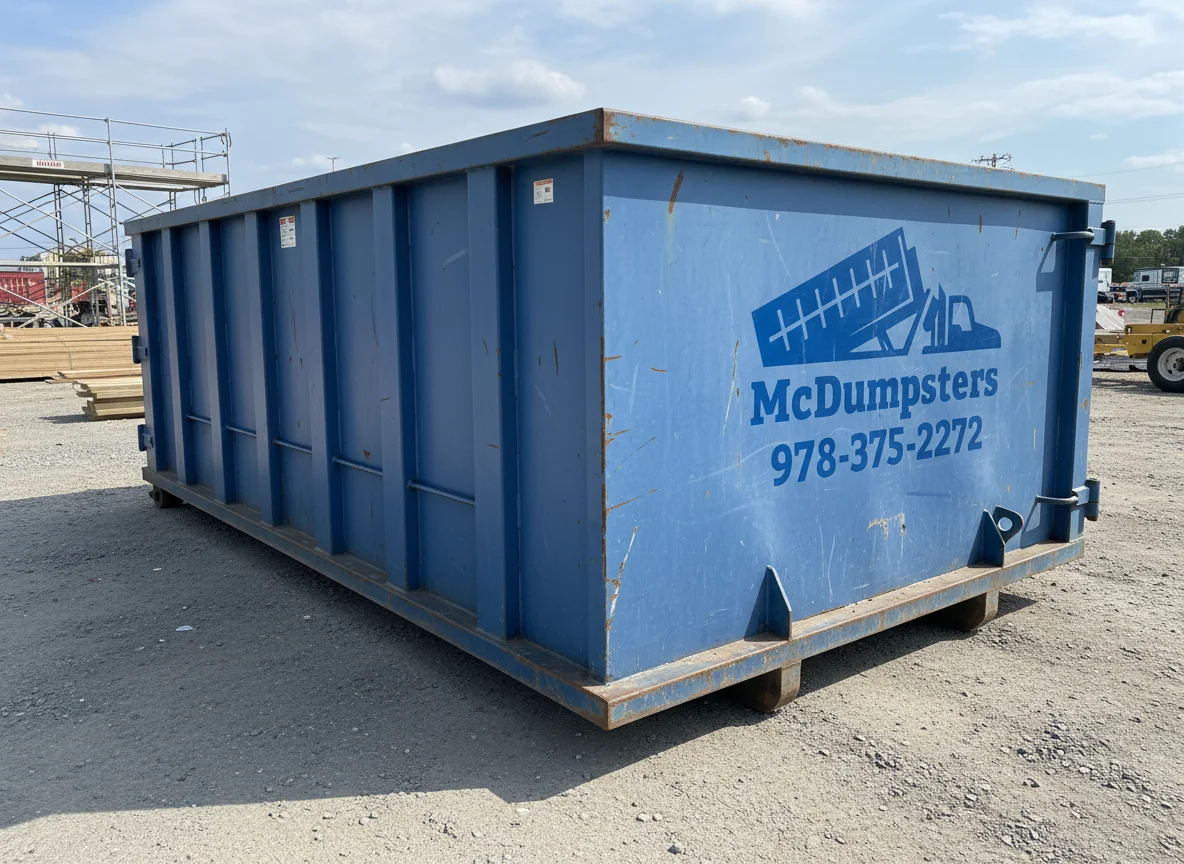
You rented a dumpster. You are standing in your driveway staring at a pile of junk. And now you are wondering: can this stuff actually go in the dumpster, or am I going to get fined?
Massachusetts has some of the strictest waste disposal rules in the country, thanks to the Massachusetts Department of Environmental Protection (MassDEP). This guide covers everything you need to know so you do not end up on the wrong side of a disposal violation.
What You CAN Put in a Dumpster
The good news: most common project debris is perfectly fine for a roll off dumpster.
Household Items
- Furniture (couches, tables, chairs, shelving, desks)
- Clothing, linens, and fabric (unless your town has a textile ban in effect)
- Toys, sporting goods, and general household clutter
- Books, papers, cardboard boxes
- Non-hazardous kitchen and bathroom items
Construction and Renovation Debris
- Drywall and sheetrock
- Lumber, framing, plywood, OSB
- Concrete, brick, and stone (be careful with weight — this stuff is heavy)
- Asphalt shingles, roofing underlayment, flashing
- Tile, hardwood, carpet, vinyl, and linoleum flooring
- Cabinets, countertops, sinks, and non-refrigerant fixtures
- Windows and doors (remove glass carefully)
- Insulation (fiberglass only — not vermiculite, which may contain asbestos)
Metal
- Scrap metal, pipes, fittings, hardware
- Metal fencing, gutters, flashing
- Nails, screws, brackets (bag these up)
Yard Waste
- Branches, brush, and tree limbs
- Leaves, grass clippings, garden debris
- Sod and dirt (in small amounts — discuss with us first, very heavy)
Mattresses and Box Springs
- Yes, these can go in. Massachusetts added mattresses to its waste ban list in 2022, but this only affects curbside trash collection. When you are paying for a dumpster, the disposal facility accepts them and handles recycling compliance. You do not need to worry about it.
The MassDEP Waste Bans: What You Need to Know
The Massachusetts Department of Environmental Protection (MassDEP) maintains a list of materials that are banned from disposal in the state. These bans exist to divert recyclable or hazardous materials from landfills.
Here is what is currently banned and what it means for you:
Materials Banned from MA Disposal Facilities
Paper and Cardboard — Recyclable paper and corrugated cardboard cannot be disposed of in large quantities. Small amounts mixed with other debris in a dumpster are generally fine. If you have large amounts of clean cardboard, recycle it separately.
Metal and Appliances — Scrap metal is banned from disposal because it is recyclable. Metal items mixed into a dumpster load are typically separated at the facility. White goods (appliances) have additional rules depending on whether they contain refrigerants.
Leaf and Yard Waste — Banned from disposal since 1991. However, small amounts mixed with other dumpster debris are typically accepted. For large-scale yard waste, use your town compost facility or discuss with us.
Glass and Plastic Containers — Banned from disposal in commercial quantities. Residential dumpster loads with some bottles and jars mixed in are fine.
Textiles — As of November 2022, textiles (clothing, shoes, towels, sheets) are banned from MA trash disposal. Donate usable items or use textile recycling drop-offs. Small amounts in a dumpster load are usually not flagged, but do not fill a dumpster with just clothing.
Mattresses — Banned from trash disposal as of November 2022. Accepted in dumpster rental loads where the disposal facility handles recycling compliance separately.
Food Waste — Businesses and institutions generating more than half a ton of food waste per week must divert it. This generally does not apply to residential dumpster rentals.
Prohibited Materials: What Absolutely Cannot Go in a Dumpster
These items are illegal to put in a dumpster in Massachusetts. Period.
Hazardous Chemicals and Liquids
- Paint (liquid), stains, varnishes, solvents, thinners
- Pesticides, herbicides, pool chemicals
- Household cleaners with hazardous ingredients
- Motor oil, transmission fluid, brake fluid, antifreeze
- Gasoline, kerosene, propane
Electronics (Covered by MA E-Waste Law)
- Televisions and monitors (contain lead and mercury)
- Computers, laptops, tablets
- Printers, copiers, fax machines
- Any device with a circuit board
Appliances with Refrigerants (CFC/HCFC)
- Refrigerators, freezers, wine coolers
- Air conditioning units (window and central)
- Dehumidifiers
- These require certified refrigerant recovery before disposal
Batteries
- Car batteries (lead-acid)
- Lithium-ion batteries (laptops, phones, power tools)
- Alkaline batteries (in bulk — small quantities are technically OK but not recommended)
Tires
- Banned from MA landfills since 1990
- Must be recycled through a tire retailer or town collection event
Medical and Biohazard Waste
- Sharps (needles, syringes, lancets)
- Pharmaceutical waste
- Biological materials
Asbestos
- Requires licensed removal by a certified abatement contractor
- Cannot go in any standard dumpster
- Common in pre-1980 homes (floor tiles, insulation, pipe wrap, popcorn ceilings)
Propane Tanks and Pressurized Containers
- Propane tanks (any size)
- Compressed gas cylinders
- Fire extinguishers
- Aerosol cans that are not completely empty
Gray Area Items: Ask Before You Toss
These items are situational. Call us at (978) 375-2272 and we will tell you straight.
- Dried paint cans: If the paint is completely hardite and solid, most facilities accept them. Leave the lid off so they can verify.
- Concrete, brick, and stone: Accepted but extremely heavy. A few hundred pounds mixed with other debris is fine. A dumpster full of concrete will blow past weight limits. Discuss with us first.
- Dirt and fill: Same as concrete — it is the weight that is the issue, not legality.
- Appliances WITHOUT refrigerants: Washers, dryers, stoves, dishwashers — generally accepted.
- Treated lumber (CCA/pressure-treated): Accepted in most MA facilities but some have restrictions. Ask first.
- Drywall: Accepted, but some facilities charge extra for large quantities because it requires separate processing.
Where to Dispose of Prohibited Items in Middlesex County
Every town in our service area has options for the items that cannot go in a dumpster:
Town Transfer Stations and Recycling Centers
- Most towns operate a recycling center or transfer station that accepts electronics, batteries, scrap metal, and sometimes hazardous materials on specific days.
- Billerica: Transfer Station on Treble Cove Road
- Lexington: Hartwell Avenue Compost Facility (yard waste and cardboard primarily)
- Chelmsford: Recycling Center on Alpha Road
- Lowell: Recycling Center on Plain Street
Hazardous Waste Collection Days
- MassDEP coordinates regional hazardous waste collection events throughout the year. Check your town's website or call your DPW for the next scheduled date.
Retailer Take-Back Programs
- Home Depot, Lowe's, and Staples accept certain electronics and batteries
- Tire retailers accept old tires (usually $3-5 per tire)
- Many paint retailers accept leftover paint through PaintCare (if Massachusetts joins the program) or municipal collection
The Bottom Line
Most of what comes out of a renovation, cleanout, or demolition project is perfectly fine for a dumpster. The main things to watch out for are hazardous chemicals, electronics, refrigerant appliances, and asbestos.
When in doubt, call us at (978) 375-2272. We have been dealing with Massachusetts disposal rules since we started and can tell you in 30 seconds whether your item is OK. That is part of the service.
Related Articles
- Dumpster Permit Guide: Middlesex County 2026
- Recycling Construction Debris in Massachusetts
- Demolition Permits in Massachusetts: Town-by-Town Guide for Middlesex County
Explore Our Services
Ready to Rent a Dumpster?
Call us today for same-day delivery and transparent pricing.
Call (978) 375-2272